
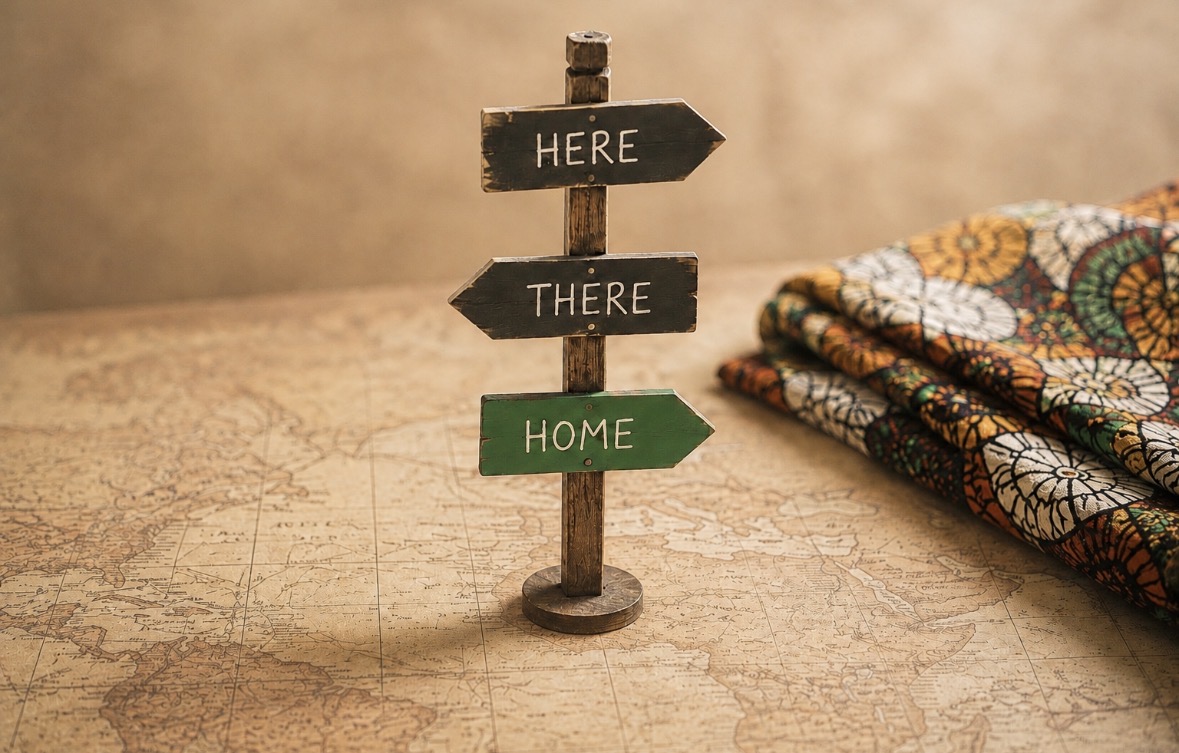
For families living across cultures, belonging is not always straightforward. Parents may be building a life in one country while keeping a strong connection to another, and their children are forming their own relationship with both.
For children who have moved countries, the change can be more obvious because they remember the life they left behind. For those born in the diaspora, there may never have been such a clear divide. Both cultures may have always been part of who they are.
In conversation with one British-Nigerian mother, she recalls a moment during the World Cup that made this particularly clear. While watching football together, the conversation naturally turns to what would happen if Nigeria and England played against each other. Her children say they would not know who to support.
Their answer catches her off guard. She had assumed they would choose Nigeria, but it makes her think about what both countries actually represent to them.
Nigeria is family, holidays, memories and a place they love. Britain is where they grew up and live their everyday lives. Both are part of their story.
For diaspora parents, this can be an important realisation. We may put a lot of effort into keeping our children connected to our heritage and naturally hope they will feel strongly attached to it. But their connection may not look exactly like ours.
A parent who migrated may think of one country as where they came from and another as where they now live. A child growing up between the two may not make that distinction at all.
That does not make passing on culture any less important. Children still benefit from knowing their heritage, maintaining family connections and having opportunities to experience the culture for themselves. But giving them that foundation is different from deciding how they should identify with it.
Perhaps our role is to give them the connection and then allow them to make sense of it in their own way. A child feeling at home in the country they are growing up in does not mean they are losing their heritage, just as loving their family’s country of origin does not make their everyday home less important.
There is no perfect formula for raising children between cultures. What we can do is help them understand where they come from without making them feel that they have to choose between different parts of themselves.
Sometimes, both really are home.
